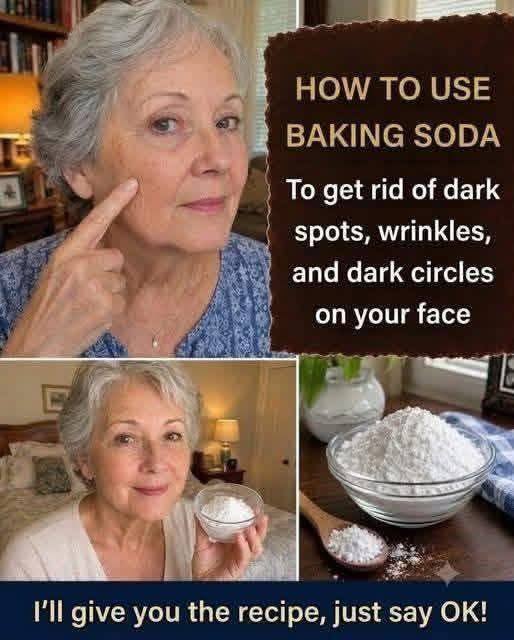
Have you ever looked in the mirror and noticed new fine lines, dark spots, or shadows under your eyes? These little changes can appear gradually, sometimes so slowly that we barely notice them until one morning.
As we get older, our skin naturally changes. It may become drier, lose some elasticity, and develop areas of uneven pigmentation.
That’s why homemade skincare remedies have become so popular, especially those made with simple kitchen ingredients.
One ingredient that frequently appears in viral beauty recipes is baking soda.
Some people claim that mixing baking soda with water can remove wrinkles, fade dark spots, and eliminate dark circles.
But does this popular kitchen ingredient really deserve a place in your skincare routine?
The truth is that baking soda isn’t a proven treatment for skin aging. Its alkaline nature may actually irritate delicate facial skin.
Fortunately, there are gentler homemade alternatives that can help your skin feel softer, smoother, and more comfortable.
Why Is Baking Soda Popular in Skincare?
Baking soda, also known as sodium bicarbonate, is a fine white powder commonly used in baking and household cleaning.
Because it has a slightly abrasive texture, some homemade beauty recipes recommend using it as a facial scrub.
The idea is that removing dead surface skin cells might make the face appear smoother.
However, facial skin has a natural protective barrier that needs to remain healthy.
The skin’s surface is normally slightly acidic.
Baking soda is alkaline, which means repeated application can disturb that natural balance.
This may contribute to dryness, redness, itching, and irritation.
For mature skin, which may already be more prone to dryness, harsh ingredients can make existing concerns more noticeable.
Can Baking Soda Really Remove Wrinkles?
Wrinkles develop because of several natural changes in the skin.
As we age, collagen and elastin gradually change, affecting the skin’s structure and elasticity.
Collagen helps maintain firmness, while elastin contributes to flexibility.
Sun exposure, genetics, smoking, and environmental conditions can also influence visible skin aging.
Baking soda doesn’t replace collagen or restore lost elasticity.
Although scrubbing might temporarily change how the skin feels, it doesn’t eliminate deep wrinkles.
In fact, using abrasive ingredients too frequently can weaken the protective skin barrier.
When the skin becomes dry or irritated, fine lines may appear more pronounced.
A better approach is to focus on consistent moisturizing, gentle cleansing, and daily sun protection.
What Causes Dark Spots on the Face?
Dark spots can appear for several reasons.
Some develop after years of sun exposure.
Others may occur after acne, inflammation, or certain skin injuries.
Hormonal changes can also contribute to pigmentation conditions such as melasma.
These marks are not all the same, so they may require different approaches.
There is no reliable scientific evidence that baking soda safely removes dark spots.
Because baking soda may irritate the skin, repeated use could worsen discoloration in some individuals.
This is particularly important for people who are prone to post-inflammatory hyperpigmentation.
For everyday prevention, broad-spectrum sunscreen is one of the most useful skincare products.
Why Do Dark Circles Appear?
Dark circles are another common concern, especially as we get older.
Many people assume they appear only because of poor sleep.
However, genetics, skin pigmentation, allergies, facial anatomy, and changes in skin thickness can all contribute.
The skin around the eyes is especially delicate.
Applying baking soda to this area may cause irritation and accidental eye exposure.
It isn’t a proven treatment for dark circles.
Instead, gentle moisturizing, sun protection, adequate sleep, and addressing allergies when present are more reasonable options.
A cool compress may also temporarily reduce puffiness.
A Gentle Homemade Oatmeal Face Mask
If you enjoy preparing homemade skincare treatments, you can try a simple oatmeal mask instead of baking soda.
Oatmeal is a familiar ingredient in many soothing skincare products.
Specially processed colloidal oatmeal has recognized benefits for supporting dry and irritated skin.
This homemade recipe is intended to help skin feel comfortable and moisturized.
It will not permanently remove wrinkles or treat pigmentation disorders.
Ingredients
- 2 tablespoons finely ground plain oatmeal
- 1 tablespoon plain unsweetened yogurt
- 1 teaspoon clean water, if needed
For sensitive skin, replace the yogurt with enough water to create a soft paste.
Avoid flavored oatmeal or products containing added fragrances.
How to Prepare the Homemade Face Mask
Step 1 Prepare the Oatmeal
Place the plain oatmeal in a clean blender or grinder.
Process until it becomes a very fine powder.
The smoother the texture, the more comfortable it will be to apply.
Avoid leaving large, rough particles that could scratch delicate skin.
Step 2 Mix the Ingredients
Transfer the ground oatmeal into a clean bowl.
Add the plain yogurt.
Stir gently until the mixture forms a smooth paste.
If the texture is too thick, add a few drops of water.
The finished preparation should be creamy and easy to spread.
Step 3 Perform a Patch Test
Before using a new homemade skincare mixture, apply a small amount to an area of intact skin.
Wait 24–48 hours and check for redness, itching, or irritation.
If you notice a reaction, avoid using the preparation.
Step 4 Apply Gently
Wash your face using a mild cleanser.
Pat your skin dry with a clean towel.
Apply a thin layer of the oatmeal mixture.
Avoid the eyes, eyelids, lips, and any broken or irritated skin.
Do not scrub.
Step 5 Allow the Mask to Rest
Leave the mask on for approximately 5–10 minutes.
There’s no need to let it become completely dry.
If you experience burning or discomfort, rinse it off immediately.
Step 6 Rinse and Moisturize
Rinse your face gently with lukewarm water.
Pat dry using a soft towel.
Finish with a fragrance-free moisturizer.
Prepare a fresh mixture for each use and discard leftovers.
Why Moisturizing Is Important for Mature Skin
Dryness can make fine lines look more noticeable.
As we age, the skin may become less effective at retaining moisture.
A suitable moisturizer helps reduce water loss and supports the skin’s natural protective barrier.
Look for products containing ingredients such as glycerin, ceramides, hyaluronic acid, or petrolatum.
These ingredients are commonly used in skincare products designed to maintain hydration.
Well-moisturized skin can temporarily appear smoother and feel softer.
However, moisturizing doesn’t permanently remove deep wrinkles.
Consistency is usually more important than using complicated homemade treatments.
A Simple Morning Skincare Routine
You don’t need dozens of beauty products to maintain a gentle skincare routine.
Begin by washing your face with a mild cleanser.
Avoid very hot water, especially if your skin is dry.
Apply a moisturizer suited to your skin type.
Finish with broad-spectrum sunscreen with SPF 30 or higher.
Sun protection helps prevent premature skin aging and can reduce the worsening of sun-related pigmentation.
Remember to apply sunscreen to the neck and other exposed areas.
A Simple Evening Skincare Routine
In the evening, gently remove makeup, sunscreen, and dirt.
Use a cleanser that doesn’t leave your face feeling tight or uncomfortable.
Pat your skin dry.
Apply a fragrance-free moisturizer.
If you’re concerned about persistent dark spots or wrinkles, a dermatologist can recommend evidence-based treatments.
Certain professionally formulated ingredients, including retinoids and azelaic acid, may help specific skin concerns.
However, these products aren’t suitable for everyone, and retinoids should be avoided during pregnancy.
Introduce new skincare products carefully.
Other Homemade Ingredients to Avoid
Not every kitchen ingredient is suitable for facial skincare.
Lemon Juice
Fresh lemon juice is highly acidic.
Applying it directly to the skin can cause irritation and may contribute to reactions associated with sunlight.
Toothpaste
Toothpaste is designed for teeth, not facial skin.
It may contain ingredients that cause dryness or irritation.
Coarse Salt
Salt crystals can be abrasive.
Scrubbing sensitive skin with coarse salt may damage its protective barrier.
Undiluted Essential Oils
Essential oils are concentrated plant extracts.
Some can cause allergic reactions, burning, or irritation.
Baking Soda
Despite its popularity in homemade beauty videos, baking soda is not a proven treatment for wrinkles, dark spots, or dark circles.
Everyday Habits for Healthier Looking Skin
Good skincare involves more than creams and masks.
A balanced diet provides nutrients needed for normal skin function.
Foods containing vitamin C contribute to the body’s natural collagen production.
Protein supplies amino acids used to maintain tissues.
Healthy fats are also important components of a nutritious diet.
Adequate sleep supports general well-being.
Staying properly hydrated helps maintain normal body function, although drinking extra water won’t erase wrinkles.
Avoiding smoking and protecting the skin from excessive sunlight are particularly valuable habits.
Small, consistent choices often matter more than dramatic beauty trends.
Common Skincare Mistakes to Avoid
Exfoliating Too Often
Excessive exfoliation can cause dryness and irritation.
Gentle skincare is particularly important for sensitive or mature skin.
Skipping Sunscreen
Sun exposure contributes to wrinkles and pigmentation.
Regular sun protection is an essential part of preventing premature skin aging.
Trying Too Many Ingredients
Introducing several new products simultaneously can make it difficult to identify the cause of a reaction.
Keep your routine simple.
Expecting Instant Results
Moisturizers can temporarily improve the appearance of dryness-related fine lines.
However, no homemade mask can permanently reverse normal skin aging overnight.
Ignoring Persistent Skin Changes
Dark spots that change in appearance, bleed, or develop unusual borders should be evaluated by a healthcare professional.
Frequently Asked Questions
Can baking soda remove wrinkles overnight?
No. There is no reliable scientific evidence that baking soda eliminates wrinkles or reverses aging.
Can baking soda remove dark spots?
Baking soda isn’t a proven treatment for pigmentation and may irritate the skin.
Can I use baking soda under my eyes?
It’s best to avoid applying baking soda around the eyes because the skin in this area is particularly delicate.
Is oatmeal good for dry skin?
Oatmeal is commonly used in soothing skincare preparations. Commercial colloidal oatmeal products have more established skin-barrier benefits than homemade mixtures.
Can moisturizing make wrinkles less noticeable?
Yes. Proper hydration can temporarily reduce the appearance of fine lines associated with dryness.
How often should I use a homemade oatmeal mask?
Occasional use may be appropriate if your skin tolerates it, but a homemade mask isn’t necessary for healthy skin.
What is the best way to prevent premature wrinkles?
Daily sun protection, gentle moisturizing, avoiding smoking, and maintaining healthy habits are important.
How long does it take for dark spots to fade?
The timeline depends on the cause. Some marks fade gradually over several months, while others require professional treatment.
Final Thoughts
Baking soda is a useful household ingredient, but it isn’t a miracle solution for facial wrinkles, dark spots, or dark circles.
Although viral beauty recipes often promise dramatic transformations, these claims aren’t supported by reliable scientific evidence.
Applying baking soda directly to the face may cause dryness, irritation, and damage to the skin’s protective barrier.
If you enjoy homemade skincare, a gentle oatmeal mask may be a more comfortable occasional option when properly prepared and tolerated.
For everyday care, focus on consistent moisturizing, gentle cleansing, and broad-spectrum sunscreen.
Healthy skin doesn’t need to look completely wrinkle-free.
Taking care of your skin with realistic, gentle habits can help it remain comfortable and well protected throughout every stage of life.