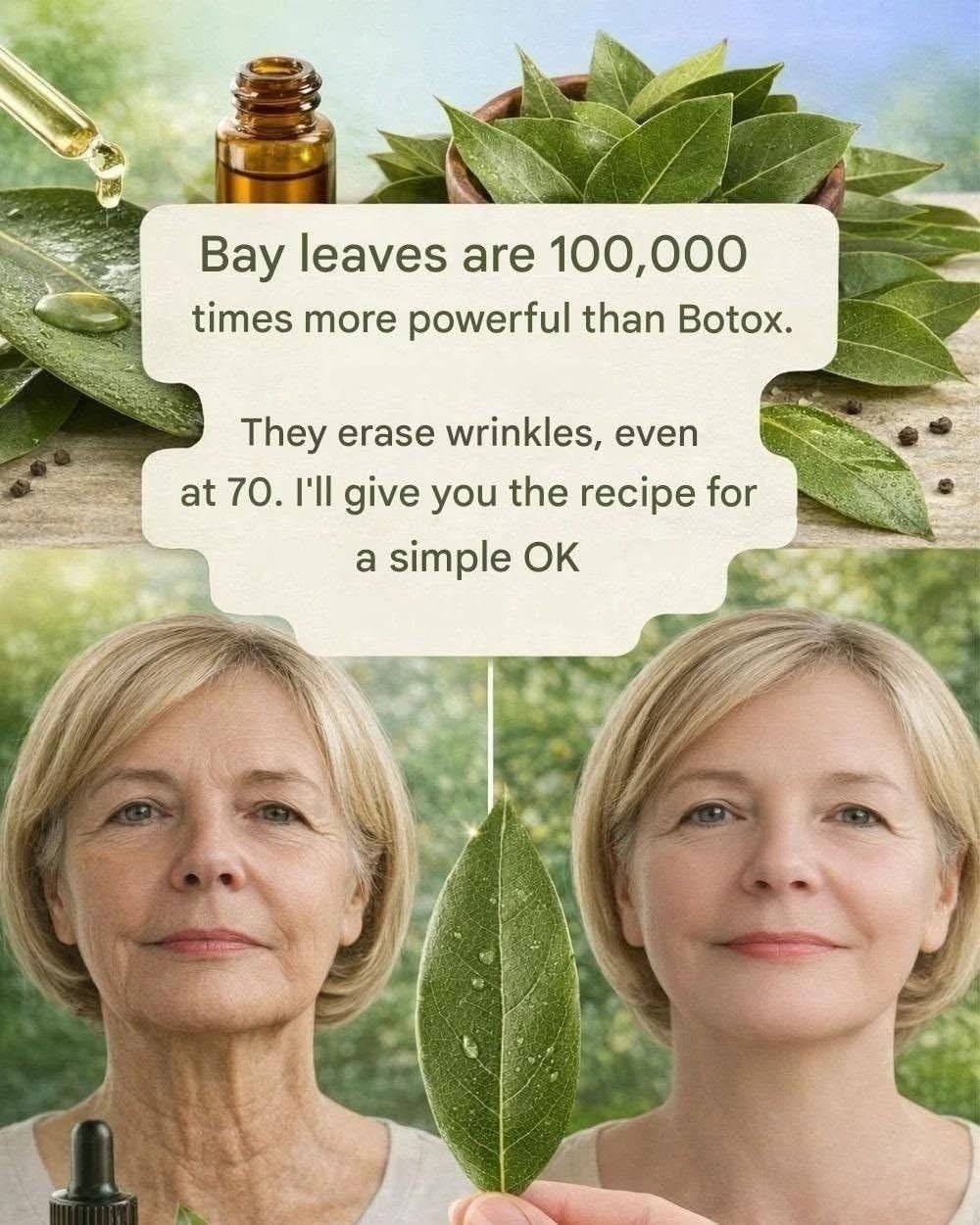
What if the secret to softer, healthier-looking skin was simpler than you imagined?
Bay leaves are among the most familiar ingredients in our kitchens. We use them to flavor soups, stews, sauces, and slow-cooked meals. But recently, these fragrant green leaves have also become popular in homemade beauty discussions.
Some viral posts claim that bay leaves are thousands of times more powerful than Botox and can make wrinkles disappear, even after the age of 70.
It sounds almost too good to be true.
And unfortunately, those extraordinary claims aren’t supported by scientific evidence.
Although bay leaves contain naturally occurring plant compounds, there is no reliable proof that applying them to your face can eliminate wrinkles or reverse skin aging.
However, there are simple ways to care for mature skin, improve hydration, and help dry skin appear smoother.
Let’s explore the truth about bay leaves, understand what causes wrinkles, and discover an easy homemade moisturizing treatment that can become part of a gentle skincare routine.
What Are Bay Leaves?
Bay leaves come from the bay laurel tree, scientifically known as Laurus nobilis.
This evergreen tree is native to the Mediterranean region and has been valued for centuries because of its fragrant leaves.
Bay leaves are commonly used in cooking to add depth and aroma to savory dishes.
Their slightly herbal, woody fragrance makes them especially popular in soups, beans, sauces, and roasted meals.
The leaves also contain natural aromatic substances, including compounds such as eucalyptol and other volatile components.
Some of these compounds have been investigated in laboratory studies.
However, the presence of interesting plant chemicals doesn’t automatically make bay leaves effective skincare ingredients.
Their established role remains primarily culinary.
Why Are Bay Leaves Popular in Homemade Beauty Recipes?
Homemade beauty traditions often feature familiar plants, herbs, and oils.
Bay leaves have appeared in various traditional preparations, including herbal infusions and infused oils.
Some people believe these mixtures can help the skin feel smoother or appear more youthful.
However, traditional popularity isn’t the same as proven effectiveness.
A concentrated plant extract may behave differently from the original leaf, and applying it to the skin may cause irritation.
There is currently no strong clinical evidence that homemade bay leaf preparations improve wrinkles, restore collagen, or tighten loose facial skin.
For this reason, it’s better to separate the interesting history of bay leaves from unsupported cosmetic promises.
Can Bay Leaves Really Remove Wrinkles?
Wrinkles develop naturally as the skin ages.
Over time, collagen and elastin undergo changes that affect the skin’s firmness and flexibility.
The skin also gradually becomes less effective at retaining moisture.
Sun exposure, smoking, genetics, and environmental conditions can make visible signs of aging more pronounced.
Bay leaves don’t replace lost collagen or restore youthful skin structure.
They also don’t work through the same mechanism as Botox.
Botox is a prescription treatment that temporarily relaxes certain facial muscles responsible for expression lines.
There is no meaningful scientific basis for comparing ordinary bay leaves to Botox using claims such as being 100,000 times stronger.
However, improving skin hydration can temporarily make some fine lines appear less noticeable.
That’s why gentle moisturizing is such an important part of caring for mature skin.
A Simple Homemade Moisturizing Treatment
The image shows bay leaves alongside a bottle of golden-colored oil.
Although homemade bay leaf oils are sometimes promoted as wrinkle treatments, concentrated herbal oils can irritate the face.
A safer approach is to prepare a small moisturizing mixture using ingredients specifically intended for skincare.
This simple recipe is designed to help dry skin feel softer and more comfortable.
It won’t permanently remove wrinkles or produce effects comparable to cosmetic procedures.
Ingredients
- 1 teaspoon fragrance-free facial moisturizer
- 2 drops cosmetic-grade jojoba oil
- 1 drop cosmetic-grade squalane, optional
- A small clean bowl
- A clean spoon
Choose products suitable for your skin type.
Avoid adding bay leaf essential oil, lemon juice, perfume, or other concentrated plant extracts.
How to Prepare the Moisturizing Mixture
Step 1 Prepare Your Workspace
Begin by washing your hands thoroughly.
Make sure your bowl and spoon are clean and completely dry.
Place one teaspoon of moisturizer into the bowl.
Step 2 Add the Oil
Add two drops of cosmetic-grade jojoba oil.
If desired, include one drop of squalane.
These ingredients are commonly used in skincare products because they can help reduce the feeling of dryness.
A small quantity is enough.
Step 3 Mix Everything
Stir gently until the ingredients are combined.
The mixture should have a smooth, creamy texture.
Avoid adding excessive oil because this may make the preparation feel greasy.
Step 4 Perform a Patch Test
Before applying the mixture to your face, test it on a small area of intact skin.
Observe the area for 24–48 hours.
If redness, itching, burning, or irritation develops, avoid using the mixture.
Step 5 Apply Gently
Once you’ve confirmed that your skin tolerates the ingredients, apply a small amount to clean skin.
Massage gently without pulling or stretching.
Avoid the eyes and any irritated or broken areas.
Prepare only enough for immediate use and discard leftovers.
Why Moisturizing Matters for Mature Skin
One of the most noticeable changes in aging skin is dryness.
As the skin becomes less effective at retaining moisture, fine lines may appear more prominent.
A suitable moisturizer helps reduce water loss and supports the skin’s protective barrier.
Ingredients such as glycerin, ceramides, hyaluronic acid, petrolatum, and squalane are commonly used for this purpose.
Regular moisturizing can temporarily improve the appearance of dryness-related fine lines.
It can also help the skin feel softer and more comfortable.
However, moisturizing doesn’t reverse the deeper structural changes associated with aging.
Consistency matters more than using an expensive product or trying a new homemade treatment every day.
The Importance of Sun Protection
If you’re looking for a simple way to protect your skin from premature aging, sunscreen deserves a place in your daily routine.
Ultraviolet radiation contributes to wrinkles, uneven pigmentation, and changes in skin texture.
Using broad-spectrum sunscreen with SPF 30 or higher helps protect against sun-related damage.
Apply it to your face, neck, hands, and other exposed areas.
Reapply according to the product instructions, especially when spending time outdoors.
Protective clothing, hats, and shade can provide additional protection.
Unlike viral claims about homemade wrinkle remedies, the benefits of sun protection are supported by substantial scientific evidence.
A Gentle Morning Skincare Routine
Taking care of mature skin doesn’t need to be complicated.
Begin your morning with a gentle cleanser.
Avoid very hot water, which may contribute to dryness.
Pat your skin dry using a soft towel.
Apply a fragrance-free moisturizer suited to your skin type.
Finish with broad-spectrum sunscreen.
These simple steps help maintain skin comfort while protecting against excessive sunlight.
A Simple Evening Skincare Routine
In the evening, gently cleanse your face to remove sunscreen, makeup, and accumulated dirt.
Avoid harsh scrubs or strongly fragranced products if your skin is sensitive.
Apply a moisturizing cream while your skin is slightly damp.
For very dry areas, a small amount of plain petroleum jelly over moisturizer may help reduce overnight moisture loss.
If you’re concerned about deeper wrinkles or persistent pigmentation, a dermatologist can recommend treatments appropriate for your skin.
Natural Ingredients Aren’t Always Safe
It’s tempting to assume that anything coming from a plant must be gentle.
However, natural ingredients can cause allergic reactions and irritation.
Bay leaf essential oil is particularly concentrated.
It should not be applied directly to facial skin as a homemade anti-aging treatment.
Fresh lemon juice, undiluted essential oils, coarse salt, and toothpaste are also commonly promoted in viral beauty recipes.
These ingredients may irritate the skin or damage its protective barrier.
For mature or sensitive skin, gentle, professionally formulated products are generally a more dependable choice.
Everyday Habits for Healthy Looking Skin
Good skincare involves more than topical products.
A balanced diet provides nutrients needed for normal skin function.
Protein supplies amino acids involved in maintaining body tissues.
Vitamin C is essential for normal collagen formation.
Healthy fats also contribute to balanced nutrition.
Adequate sleep supports overall well-being.
Avoiding smoking is especially important because tobacco contributes to premature skin aging.
Staying hydrated supports normal body function, although drinking extra water won’t erase wrinkles.
Small daily habits can be more useful than relying on one supposed miracle ingredient.
Common Mistakes to Avoid
Expecting Immediate Results
No homemade bay leaf treatment has been proven to eliminate deep wrinkles overnight.
Applying Essential Oils Directly
Concentrated essential oils may cause irritation or allergic reactions.
Using Too Many Products
Introducing several ingredients at once makes it difficult to identify the cause of a skin reaction.
Exfoliating Too Aggressively
Harsh scrubbing can weaken the skin barrier and make dryness worse.
Forgetting Sunscreen
Regular sun protection is one of the most important steps for preventing premature skin aging.
Frequently Asked Questions
Can bay leaves remove wrinkles?
There is no reliable scientific evidence that bay leaves remove wrinkles or reverse skin aging.
Are bay leaves stronger than Botox?
No. Claims that bay leaves are thousands of times stronger than Botox have no established scientific basis.
Can I apply bay leaf oil to my face?
Homemade concentrated bay leaf oil isn’t recommended for facial use because it may cause irritation or allergic reactions.
Can moisturizing make wrinkles less noticeable?
Yes. Moisturizing can temporarily improve the appearance of fine lines associated with dryness.
What is the best natural approach for mature skin?
Gentle cleansing, consistent moisturizing, sun protection, balanced nutrition, and avoiding smoking are useful everyday habits.
Can older skin still benefit from moisturizing?
Absolutely. Skin at every age can benefit from appropriate hydration and protection.
How quickly can dry skin feel softer?
A suitable moisturizer may improve the feeling of dryness after application. Results vary depending on the product and individual skin condition.
Should I use homemade herbal oils every day?
There is insufficient evidence supporting daily use of homemade herbal oils for anti-aging purposes. Concentrated plant preparations may also irritate sensitive skin.
Final Thoughts
Bay leaves are wonderful aromatic herbs with a long history in Mediterranean cooking.
Their fragrance and culinary versatility make them valuable ingredients in many homemade recipes.
However, claims that bay leaves are more powerful than Botox or can erase wrinkles at any age are not supported by reliable scientific evidence.
If your goal is softer, smoother-looking skin, focus on gentle moisturizing, consistent sun protection, and products suitable for your skin type.
A simple moisturizing mixture may help dry skin feel more comfortable, but it shouldn’t be confused with a treatment that reverses aging.
Healthy skin doesn’t need to be perfectly wrinkle-free.
Sometimes the best beauty routine is simply one that keeps your skin hydrated, protected, and cared for throughout every stage of life.