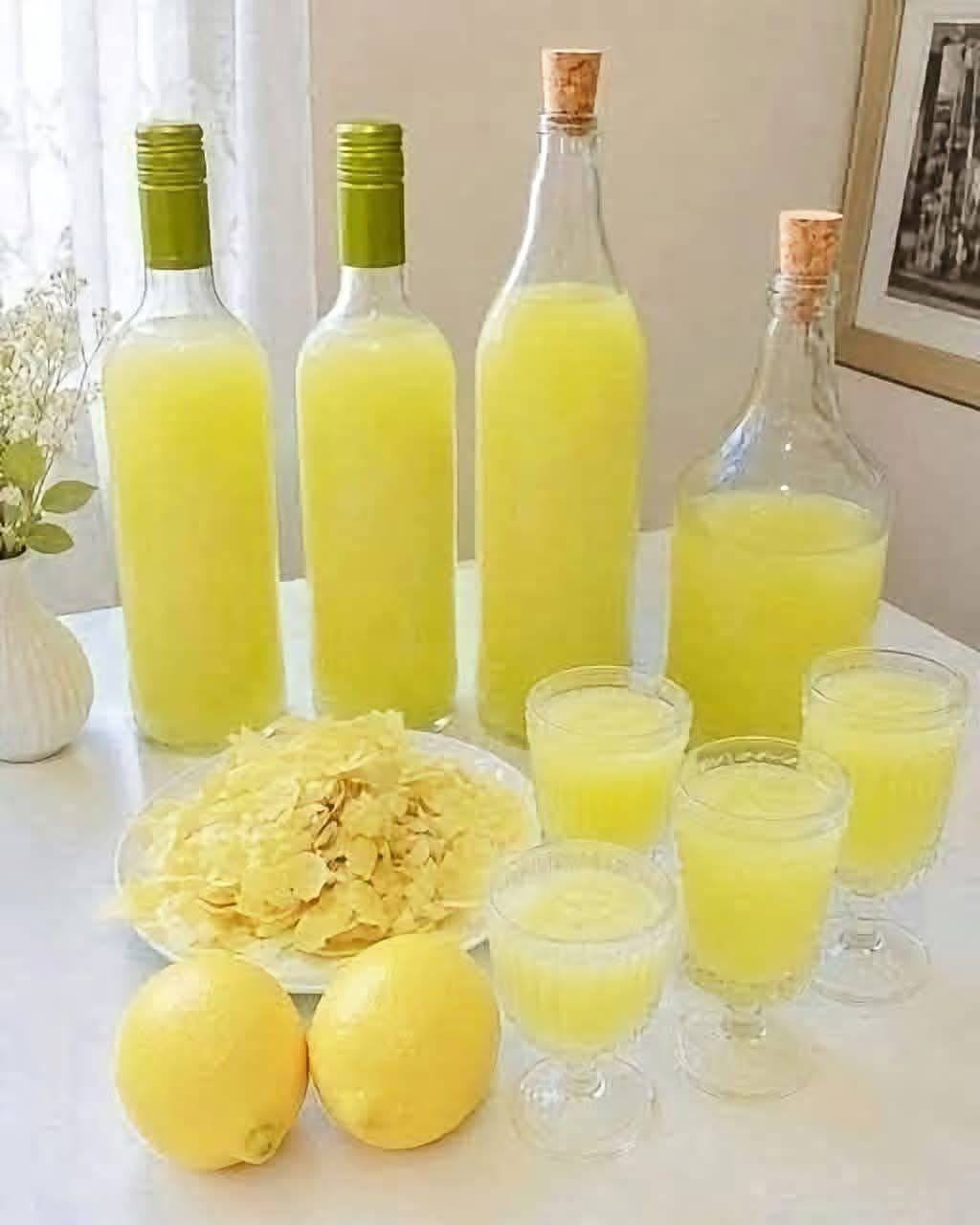
There’s something wonderful about turning a handful of fresh lemons into a beautiful homemade drink. The bright yellow color, refreshing citrus fragrance, and smooth lemon flavor make this traditional Italian favorite feel like a little sunshine in a glass.
Homemade limoncello is one of those recipes that looks impressive but requires surprisingly little hands-on work.
Made with fresh lemon peels, vodka, sugar, and water, this classic lemon liqueur is traditionally enjoyed chilled in small glasses after a meal.
The photograph shows bottles of a pale yellow lemon drink, fresh lemons, and what appear to be thin pieces of lemon peel. These are characteristic of homemade limoncello, although the exact preparation cannot be identified from appearance alone.
If you’ve ever wondered how to prepare a delicious lemon liqueur at home, this easy recipe is a lovely place to start.
What Is Limoncello?
Limoncello is a traditional Italian lemon liqueur particularly associated with southern Italy.
It is made by infusing lemon zest in alcohol, then combining the flavored liquid with a simple sugar syrup.
The result is a sweet, fragrant drink with a distinctive lemon flavor.
Unlike freshly squeezed lemonade, limoncello gets much of its aroma from the yellow outer peel of lemons.
That outer layer contains aromatic oils responsible for the fruit’s characteristic citrus fragrance.
Traditional limoncello is usually served cold in small portions.
It’s often enjoyed after dinner or offered to guests during special occasions.
Making it at home is a rewarding kitchen project, especially when fresh, fragrant lemons are available.
Why You’ll Love Homemade Limoncello
One of the nicest things about homemade limoncello is its simplicity.
You only need four main ingredients.
There’s no complicated baking, cooking technique, or special machine involved.
You can also control the sweetness and intensity of the lemon flavor.
Another advantage is that the recipe produces several bottles, making it convenient for sharing with adults at family gatherings.
Homemade limoncello also makes a thoughtful gift when packaged in clean glass bottles.
And perhaps the best part is the wonderful citrus fragrance that develops as the lemon peels infuse.
It’s a simple preparation that turns ordinary ingredients into something special.
Ingredients
This recipe makes approximately 1.3–1.4 liters of homemade limoncello.
Main Ingredients
- 8 large fresh lemons
- 750 ml plain vodka, approximately 40% alcohol by volume
- 2 cups (480 ml) water
- 1 cup (200 g) granulated sugar
Optional Ingredients
- Extra lemon zest for presentation
- Fresh mint leaves for serving
- Ice cubes, if desired
Choose fresh lemons with fragrant, healthy-looking peels.
Since the peel is the main ingredient, unwaxed lemons are convenient when available.
Use commercially produced, food-grade vodka. Never use rubbing alcohol, denatured alcohol, or other nonbeverage alcohol.
How to Make Homemade Limoncello
Step 1 Wash the Lemons
Start by washing the lemons thoroughly under running water.
Gently scrub the peels with a clean produce brush to remove surface dirt.
Pat the lemons dry with a clean kitchen towel.
This is particularly important because the peel will be used directly in the infusion.
Step 2 Remove the Lemon Zest
Using a vegetable peeler, carefully remove thin strips of the yellow outer peel.
Try to avoid the thick white layer underneath, known as the pith.
The white pith has a bitter taste that can affect the finished drink.
The goal is to collect thin, fragrant strips of yellow zest.
Place the peels into a clean glass jar.
You can save the peeled lemons for lemonade, salad dressings, or other recipes.
Step 3 Add the Vodka
Pour the vodka over the lemon peels.
Make sure the peels are fully submerged.
Close the jar with a secure lid.
Gently swirl the jar to distribute the ingredients.
You should already notice the lovely lemon fragrance.
Step 4 Let the Lemons Infuse
Place the covered jar in a cool, dark location away from direct sunlight.
Allow the lemon peels to infuse for approximately 7–14 days.
During this time, the alcohol gradually extracts aromatic compounds from the peels.
The liquid should develop a yellow color and a strong citrus fragrance.
You can gently swirl the jar occasionally.
Avoid opening it unnecessarily.
The infusion time depends partly on the thickness and freshness of the lemon peels.
Step 5 Prepare the Sugar Syrup
Once the lemon infusion is ready, prepare the simple syrup.
Pour two cups of water into a saucepan.
Add one cup of granulated sugar.
Heat gently over medium-low heat while stirring.
Continue until the sugar dissolves completely.
There is no need to boil the syrup for an extended period.
Remove the saucepan from the heat and allow the syrup to cool completely.
Step 6 Strain the Lemon Infusion
Place a fine-mesh strainer over a clean bowl or pitcher.
Pour the lemon-infused vodka through the strainer.
Discard the used lemon peels.
For a clearer drink, strain the liquid again through a suitable fine filter.
The strained infusion should have a pleasant lemon aroma.
Step 7 Combine the Syrup and Infusion
Slowly pour the completely cooled sugar syrup into the lemon-infused vodka.
Stir gently until evenly combined.
The color may become lighter or slightly cloudy.
This can happen when the natural aromatic oils from the lemon peel disperse through the diluted alcohol.
Taste a small amount if appropriate.
If you prefer a sweeter limoncello, additional cooled sugar syrup can be added gradually.
Remember that adding more syrup also reduces the alcohol concentration.
Step 8 Bottle the Limoncello
Using a clean funnel, transfer the finished limoncello into clean, food-safe glass bottles.
Close them securely.
Refrigerate the bottles.
Allow the drink to rest for at least 24–48 hours before serving so the flavors can settle.
Serve chilled in small glasses.
The Secret to Delicious Homemade Limoncello
The secret to good limoncello begins with the lemons.
Fresh, fragrant peels create a more aromatic infusion.
The yellow zest contains essential citrus oils that contribute much of limoncello’s distinctive flavor.
The white pith, however, can introduce bitterness.
Removing only the yellow outer layer is one of the most important steps.
Another key detail is patience.
The lemon peels need enough time to release their flavor into the vodka.
Finally, the sugar syrup must be completely cool before combining it with the infusion.
Careful preparation helps create a smooth and balanced result.
Why Does Homemade Limoncello Sometimes Look Cloudy?
If your homemade limoncello looks slightly cloudy, don’t immediately assume something went wrong.
Cloudiness can naturally occur when water is added to an alcohol infusion containing lemon oils.
Some of those oils become dispersed throughout the mixture, creating a pale, cloudy appearance.
This is sometimes called the louche effect.
The exact appearance depends on the ingredients and their proportions.
Some homemade limoncello is bright and transparent, while other batches appear softer and more opaque.
However, cloudiness alone does not establish that a drink is safe. Unusual odors, visible contamination, or unexpected fermentation are reasons to discard a preparation.
How Sweet Should Limoncello Be?
Traditional limoncello is sweet, but sweetness varies considerably between recipes.
Some people prefer a stronger lemon flavor with less sugar.
Others enjoy a smoother, sweeter drink.
The amount of syrup influences both flavor and texture.
If you want a less sweet version, begin with a smaller amount of syrup and taste before adding more.
Remember that reducing the syrup changes the final yield and alcohol strength.
The goal is to find a balance that allows the citrus aroma to remain noticeable.
How to Serve Homemade Limoncello
Limoncello is traditionally served chilled in small glasses.
Its strong citrus flavor makes it particularly enjoyable after a meal.
You can refrigerate the bottles before serving.
For an elegant presentation, use small stemmed glasses like those shown in the photograph.
A thin curl of lemon zest can provide a decorative touch.
Limoncello is an alcoholic beverage, so serve it in modest portions to adults of legal drinking age.
It is also worth remembering that sweet liqueurs can taste milder than their alcohol content suggests.
Delicious Limoncello Variations
Once you’ve mastered the classic recipe, there are several ways to experiment with the flavor.
Orange and Lemon Liqueur
Replace the zest from two lemons with the zest from one large orange.
The orange contributes a sweeter, more rounded citrus aroma.
Less Sweet Limoncello
Reduce the amount of sugar syrup gradually.
Taste and adjust until you reach your preferred sweetness.
Vanilla Lemon Liqueur
Add a small piece of vanilla bean during the infusion.
Vanilla contributes a gentle aroma that complements the lemon.
Use it sparingly so it doesn’t overpower the citrus.
Creamy Limoncello
Some Italian recipes combine lemon-infused alcohol with a prepared milk or cream mixture.
This creates a richer, cream-colored liqueur.
Because dairy changes both storage requirements and shelf life, follow a specifically tested creamy limoncello recipe rather than adding fresh cream to a finished bottle.
What to Do With the Leftover Lemons
One of the nicest things about this recipe is that the lemons don’t have to go to waste.
After removing the zest, you’ll still have plenty of fresh lemon juice available.
Homemade Lemonade
Squeeze the lemons and combine their juice with cold water.
Sweeten lightly if desired.
Serve chilled with mint leaves.
Lemon Salad Dressing
Mix fresh lemon juice with olive oil, black pepper, and a little mustard.
Use it to dress green salads or roasted vegetables.
Lemon Marinade
Combine lemon juice with garlic, olive oil, and herbs.
Use it to season vegetables or meat before cooking.
Lemon Ice Cubes
Freeze freshly squeezed lemon juice in an ice cube tray.
Once frozen, transfer the cubes to a freezer-safe container.
Use them later in cooking or beverages.
How to Store Homemade Limoncello
Proper storage helps preserve the quality of homemade limoncello.
Use thoroughly cleaned, food-safe bottles with secure closures.
Store the finished liqueur in the refrigerator, away from direct sunlight.
Because homemade recipes vary in alcohol concentration, sugar content, and preparation conditions, a precise shelf life cannot be guaranteed without testing.
Make small batches and avoid assuming that homemade limoncello remains safe indefinitely.
For the best flavor, enjoy it while its citrus aroma is fresh.
Keep all alcoholic beverages clearly labeled and out of reach of children.
Common Mistakes to Avoid
Including Too Much White Pith
The white portion beneath the lemon zest can create bitterness.
Peel carefully and remove mostly the yellow outer layer.
Using Poor Quality Lemons
Old or damaged lemons may produce a less pleasant flavor.
Choose fresh fruit with fragrant peels.
Rushing the Infusion
A very short infusion may not extract enough lemon aroma.
Allow sufficient time for the peels to flavor the vodka.
Adding Hot Syrup
Let the sugar syrup cool completely before mixing it with the alcohol infusion.
Using Nonfood Alcohol
Never substitute rubbing alcohol or industrial alcohol for beverage-grade spirits.
Only use alcohol that is legally sold and intended for human consumption.
Forgetting the Alcohol Content
Limoncello is a liqueur, not regular lemonade.
It should be consumed responsibly and not served to children.
Frequently Asked Questions
Can I make limoncello without alcohol?
Traditional limoncello contains alcohol.
However, you can prepare a nonalcoholic lemon syrup or lemonade using lemon zest, lemon juice, water, and sugar.
The flavor and storage requirements will be different.
Why is my limoncello bitter?
The most common reason is including too much white pith with the lemon zest.
Using thin strips of yellow peel helps reduce bitterness.
Can I use regular lemons?
Yes.
Fresh, fragrant lemons from the grocery store work well.
How long should lemon peels soak in vodka?
Approximately 7–14 days is a practical starting point for this recipe.
Can I use less sugar?
Yes.
You can reduce the amount of syrup to suit your taste, remembering that the final alcohol concentration will change.
Can I use lemon juice instead of lemon peel?
Lemon juice provides acidity, but it doesn’t reproduce the same aromatic infusion as lemon zest.
Traditional limoncello relies primarily on the zest.
Is homemade limoncello supposed to be cloudy?
It can be. Natural lemon oils may create a cloudy appearance when the infusion is diluted with syrup.
Can I serve limoncello over ice?
Yes.
Although traditionally served chilled without ice, it can also be enjoyed over ice if preferred.
Final Thoughts
Homemade Italian limoncello is a lovely example of how a few simple ingredients can create something special.
With fresh lemon zest, vodka, sugar, and water, you can prepare a fragrant citrus liqueur that looks beautiful in glass bottles and is traditionally served in small glasses.
The process requires patience, but the hands-on preparation is surprisingly simple.
From peeling fresh lemons to watching the infusion develop its golden color, every step is part of the experience.
Serve it chilled to adult guests, enjoy its bright lemon fragrance, and appreciate the pleasure of making something homemade.
Sometimes the most memorable kitchen recipes aren’t the most complicated ones. They’re the ones that turn everyday ingredients into something worth sharing.