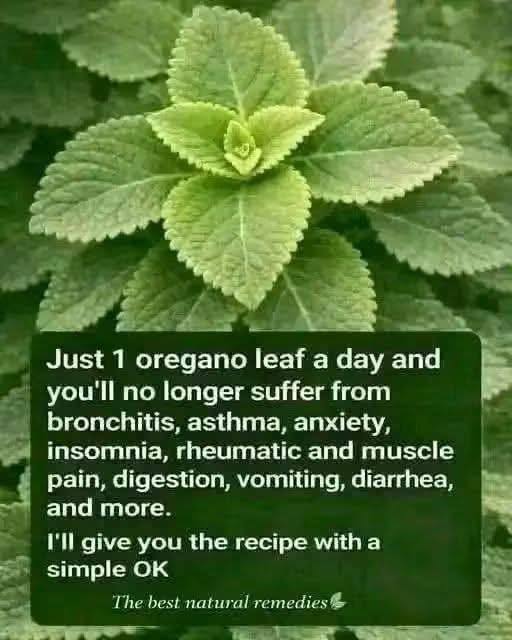
Oregano is one of those wonderful herbs that many people recognize from the kitchen. Its fragrant leaves are commonly used to season soups, sauces, vegetables, and homemade meals.
But oregano has also been part of traditional herbal practices for generations.
Recently, social media posts have suggested that eating just one oregano leaf every day can eliminate problems such as asthma, bronchitis, anxiety, insomnia, muscle pain, and digestive discomfort.
Although oregano contains interesting natural compounds, these promises go far beyond what scientific research has established.
The good news is that oregano can still be a lovely addition to a healthy lifestyle. Whether enjoyed in food or prepared as a warm herbal infusion, this aromatic plant offers flavor, tradition, and a few nutritional advantages worth exploring.
What Is Oregano?
Oregano is an aromatic herb belonging to the mint family, Lamiaceae.
The variety most commonly used in Mediterranean cooking is Origanum vulgare.
Its small leaves have a distinctive fragrance and a slightly peppery, earthy flavor.
Oregano grows naturally in many warm regions and is especially popular in Mediterranean cuisine.
It can be used fresh, dried, or as a seasoning blend.
One important detail is that the plant shown in the photograph has thick, fuzzy-looking, scalloped leaves. It resembles Cuban oregano, also called Indian borage, rather than typical Mediterranean oregano.
Cuban oregano belongs to a different botanical species, Coleus amboinicus.
Although both plants have aromatic leaves and similar culinary uses, they are not identical.
Correct identification matters, especially when preparing homemade herbal drinks.
Why Oregano Has Attracted So Much Attention
Oregano contains naturally occurring plant compounds, including phenolic substances and aromatic oils.
Two frequently discussed compounds are carvacrol and thymol.
These substances have demonstrated antioxidant and antimicrobial activity in certain laboratory experiments.
However, laboratory findings do not automatically mean that eating oregano leaves can treat infections or chronic diseases in humans.
The quantity of active compounds varies considerably depending on the plant variety, growing conditions, and preparation method.
A single leaf also cannot provide a predictable medicinal dose.
Still, oregano remains an interesting culinary herb that can be included in a balanced diet.
Potential Benefits of Oregano
Provides Natural Antioxidant Compounds
Oregano contains plant compounds that can act as antioxidants.
Antioxidants help protect molecules from oxidative reactions in laboratory settings and play various roles in human nutrition.
However, eating oregano has not been proven to prevent specific diseases.
Its greatest practical advantage is that it adds flavor to meals while contributing small amounts of beneficial plant compounds.
Adds Flavor Without Excess Salt
One of oregano’s most useful benefits is surprisingly simple.
Its strong aroma makes food taste delicious without requiring large amounts of salt.
This can be helpful for people trying to reduce their sodium intake.
Try adding oregano to roasted vegetables, homemade tomato sauce, grilled chicken, or bean dishes.
May Be Enjoyed as a Warm Herbal Drink
Traditional herbal preparations sometimes use oregano leaves in hot water.
A warm, caffeine-free infusion can be a comforting beverage, particularly during cooler weather.
The warmth and fluid may feel soothing when the throat is dry.
However, oregano tea has not been proven to cure bronchitis, asthma, or respiratory infections.
Supports a Varied Diet
Fresh herbs can make nutritious meals more enjoyable.
Oregano pairs well with vegetables, legumes, fish, and olive oil.
A varied diet rich in vegetables, fruits, whole grains, and adequate protein provides much broader nutritional benefits than relying on one particular herb.
Can Oregano Help With Asthma or Bronchitis?
This is one of the most important questions surrounding oregano.
Some laboratory research has investigated oregano compounds for their antimicrobial and anti-inflammatory properties.
However, there is insufficient reliable clinical evidence that eating oregano leaves or drinking oregano tea treats asthma or bronchitis.
Asthma is a chronic condition involving inflammation and narrowing of the airways.
It often requires prescribed inhalers and an individualized treatment plan.
Bronchitis may result from viral infections, airway irritation, or other causes.
Neither condition should be managed by replacing appropriate treatment with herbal remedies.
If you experience wheezing, persistent coughing, or breathing difficulties, seek medical guidance.
Severe breathing difficulty requires urgent medical attention.
What About Anxiety and Sleep?
Oregano has sometimes been described as a relaxing herb in traditional wellness discussions.
Its pleasant aroma and the comforting ritual of drinking a warm beverage may help some people unwind.
However, there is no strong clinical evidence that one oregano leaf daily treats anxiety disorders or insomnia.
Sleep difficulties can have many causes, including stress, caffeine consumption, irregular sleep schedules, medications, and medical conditions.
For better sleep, maintaining a consistent bedtime, limiting late caffeine, and creating a comfortable sleeping environment are more established approaches.
Persistent anxiety or insomnia deserves professional evaluation.
Oregano and Digestive Comfort
Oregano has a long history of culinary use, particularly in meals containing vegetables, beans, and meats.
Traditional preparations have also used the herb for digestive complaints.
Nevertheless, there is insufficient evidence that oregano tea reliably treats diarrhea, vomiting, or other digestive illnesses.
In fact, concentrated oregano products may irritate the digestive tract in some individuals.
Persistent vomiting or diarrhea can cause dehydration and may require medical attention.
A homemade herbal infusion should never replace oral rehydration solutions or appropriate treatment when significant fluid loss occurs.
Simple Homemade Oregano Tea
If you enjoy herbal drinks, you can prepare a mild oregano infusion at home.
This recipe is intended as an aromatic beverage, not as a treatment for illness.
Ingredients
- 1 cup water, approximately 240 ml
- 1 teaspoon fresh culinary oregano leaves, washed
- 1 small slice of lemon, optional
- ½ teaspoon honey, optional
Use only oregano that has been positively identified as an edible culinary variety.
Step 1 Prepare the Leaves
Wash the oregano leaves thoroughly under clean running water.
Remove any damaged or discolored portions.
Gently pat the leaves dry.
Step 2 Heat the Water
Pour the water into a small saucepan or kettle.
Bring it to a boil.
Remove it from the heat.
Step 3 Add the Oregano
Place the leaves in a heat-resistant cup.
Pour the hot water over them.
Cover the cup and allow the leaves to steep for approximately five minutes.
Step 4 Strain
Remove the leaves using a fine strainer.
Allow the infusion to cool to a comfortable drinking temperature.
Step 5 Add Optional Flavor
Add a small slice of lemon for freshness.
If desired, stir in a little honey.
Honey should never be given to children younger than one year.
Enjoy the tea as an occasional warm beverage.
Can You Use Dried Oregano?
Yes.
Dried culinary oregano can also be used to prepare an infusion.
Because dried herbs are more concentrated by volume than fresh leaves, begin with approximately ¼ teaspoon per cup of hot water.
Steep briefly, strain, and taste.
The flavor can become quite strong if too much oregano is added.
Use food-grade dried herbs rather than unidentified plant material or essential oils.
Fresh Oregano Versus Oregano Essential Oil
These two products are very different.
Fresh oregano leaves are commonly used as food.
Oregano essential oil is a highly concentrated preparation containing aromatic compounds.
Essential oils should not be treated as interchangeable with culinary herbs.
Undiluted oregano essential oil can irritate or burn the skin and mucous membranes.
Swallowing concentrated essential oils without professional guidance may be dangerous.
For ordinary home cooking and beverages, stick to correctly identified culinary leaves.
How to Grow Oregano at Home
Oregano can be a rewarding herb to grow in a garden or container.
Most Mediterranean oregano varieties prefer a sunny location and well-draining soil.
Choose a pot with drainage holes to prevent water from collecting around the roots.
Water when the upper layer of soil begins to dry.
Avoid keeping the soil constantly soaked.
Regularly harvesting the tips can encourage bushier growth.
Cuban oregano may require slightly different care and generally appreciates warmth and protection from frost.
Because several aromatic plants share common names, check the botanical name when purchasing seedlings.
How to Store Fresh Oregano
Fresh oregano can be stored in the refrigerator for several days.
Wrap the leaves loosely in a slightly damp paper towel.
Place them inside a reusable container or partially open storage bag.
Keep them refrigerated until needed.
For longer storage, oregano can be dried.
Spread clean leaves in a well-ventilated location away from excessive moisture.
Once completely dry, store them in an airtight container.
Discard herbs that develop mold, unusual odors, or signs of spoilage.
Important Safety Precautions
Oregano used in normal culinary quantities is generally well tolerated by most people.
However, concentrated preparations and frequent medicinal use require more caution.
People with allergies to plants in the mint family may react to oregano.
Pregnant or breastfeeding individuals should avoid medicinal-strength oregano preparations unless advised by a qualified healthcare professional, because safety information is limited.
Anyone taking prescription medications or managing a chronic medical condition should seek professional guidance before using concentrated herbal supplements.
Remember that natural ingredients can still cause adverse reactions.
Frequently Asked Questions
Is eating one oregano leaf every day beneficial?
Oregano can be part of a varied diet, but there is no evidence that one leaf daily prevents or cures multiple illnesses.
Can oregano cure asthma?
No. Oregano has not been proven to cure asthma or replace prescribed asthma medications.
Is oregano tea good for sleep?
Some people find warm herbal beverages relaxing, but oregano tea is not an established treatment for insomnia.
Can oregano help with muscle pain?
There is insufficient clinical evidence that eating oregano or drinking its tea reliably relieves muscle or joint pain.
Can oregano tea stop diarrhea?
Oregano tea is not a proven treatment for diarrhea. Hydration and appropriate medical care are more important.
Is Cuban oregano the same as regular oregano?
No. Cuban oregano and Mediterranean oregano are different plant species, although both are used in cooking.
Can I drink oregano essential oil?
No. Concentrated essential oil should not be swallowed as a substitute for oregano tea.
Final Thoughts
Oregano is a fragrant, versatile herb with a long history in cooking and traditional household practices.
Its leaves contain interesting plant compounds, and its distinctive flavor makes it a wonderful addition to everyday meals.
However, claims that a single oregano leaf can eliminate asthma, bronchitis, anxiety, insomnia, or numerous other conditions are not supported by reliable clinical evidence.
The best way to enjoy oregano is as part of a balanced diet or as an occasional mild herbal beverage.
Sometimes the simplest benefit of a plant is not a dramatic cure, but the flavor, comfort, and enjoyment it brings to our daily routine.