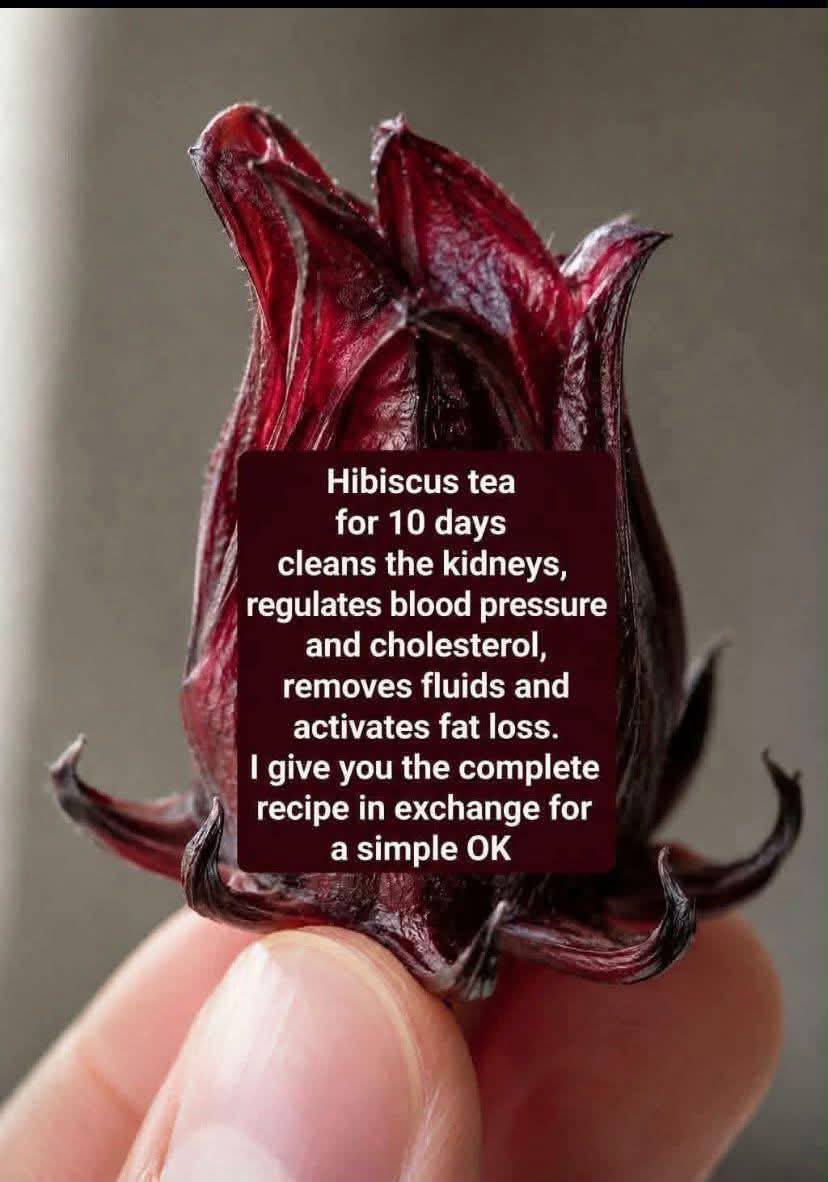
Hibiscus tea is one of those beautiful homemade drinks that immediately catches your attention. Its deep ruby-red color, refreshing tart flavor, and delicate floral aroma make it a favorite in many kitchens around the world.
Made from dried hibiscus calyces, this traditional herbal drink is enjoyed both hot and cold. Some people prefer it with lemon, while others love adding cinnamon, ginger, or a little honey.
But hibiscus tea isn’t popular only because of its delicious flavor.
Researchers have also studied hibiscus for its natural plant compounds and possible effects on blood pressure and cardiovascular health.
You may have seen social media posts suggesting that drinking hibiscus tea for ten days can cleanse the kidneys, regulate cholesterol, eliminate excess fluid, and burn belly fat.
Although hibiscus has some interesting properties, these dramatic claims go beyond what scientific research has established.
The good news is that you can still enjoy a delicious homemade hibiscus drink as part of a balanced lifestyle.
What Is Hibiscus Tea?
Hibiscus tea is a naturally caffeine-free herbal infusion made from the dried calyces of Hibiscus sabdariffa.
These deep red plant structures surround and protect the flower as it develops.
When steeped in hot water, they release a beautiful red color and a pleasantly tart flavor.
Depending on the country, hibiscus tea is known by several names.
In the Caribbean, it is often called sorrel.
In Mexico, it’s used to prepare agua de Jamaica.
In West Africa, it is commonly enjoyed as bissap.
In parts of North Africa and the Middle East, it is known as karkade.
Although the preparation methods vary, the main ingredient remains the same.
Why Is Hibiscus Tea So Popular?
One of the nicest things about hibiscus tea is its versatility.
It tastes wonderful served hot during colder weather and equally delicious poured over ice on a sunny afternoon.
Its naturally tart flavor is similar to cranberry juice.
This makes it refreshing even without large amounts of added sugar.
Hibiscus also contains naturally occurring pigments called anthocyanins.
These compounds are responsible for much of its beautiful red color.
The plant contains other polyphenols that have attracted scientific interest because of their antioxidant properties.
However, these compounds don’t mean hibiscus tea can cure diseases or replace medical treatment.
Ingredients for Homemade Hibiscus Tea
This recipe makes approximately four servings.
Ingredients
- ¼ cup dried food-grade hibiscus calyces, approximately 10–12 grams
- 4 cups (1 liter) drinking water
- 1 small cinnamon stick, optional
- 2 thin slices of fresh ginger, optional
- 1 tablespoon honey, optional
- 2 fresh lemon slices, optional
- Ice cubes, optional
Choose dried hibiscus specifically intended for food preparation.
Avoid using decorative hibiscus flowers or plants treated with chemicals unsuitable for consumption.
How to Make Hibiscus Tea
Step 1 Prepare the Hibiscus
Begin by inspecting the dried hibiscus calyces.
Remove any unwanted stems or debris.
If needed, rinse them briefly under cool running water.
The calyces should have a rich reddish color and a pleasant, slightly fruity aroma.
Step 2 Heat the Water
Pour four cups of water into a medium saucepan.
Bring the water to a gentle boil.
Once boiling, remove the saucepan from the heat.
This helps prevent the infusion from becoming unnecessarily bitter.
Step 3 Add the Hibiscus
Add the dried hibiscus to the hot water.
If you’re using cinnamon or ginger, add them now.
Stir gently.
Cover the saucepan with a lid.
Step 4 Let It Steep
Allow the mixture to steep for approximately 5–10 minutes.
During this time, the water will gradually turn a beautiful ruby-red color.
For a lighter flavor, steep for five minutes.
For a stronger, more tart flavor, leave it slightly longer.
Step 5 Strain the Tea
Pour the infusion through a fine-mesh strainer.
Discard the used hibiscus calyces and spices.
Taste the tea.
If the flavor is too concentrated, dilute it with a little additional water.
Step 6 Serve and Enjoy
For hot hibiscus tea, pour the infusion into mugs.
Add a little honey if desired.
For iced hibiscus tea, let the drink cool promptly before refrigerating.
Serve over ice with a fresh lemon slice.
Potential Benefits of Hibiscus Tea
Hibiscus has attracted attention because of the natural compounds found in its calyces.
However, it’s important to understand the difference between promising research and proven medical treatments.
May Support Healthy Blood Pressure
Blood pressure is one of the most studied areas of hibiscus research.
Some clinical trials have found that hibiscus preparations can modestly reduce blood pressure in certain adults.
The results vary depending on the preparation, amount consumed, duration, and participants’ health.
This doesn’t mean hibiscus tea can replace blood pressure medication.
People taking antihypertensive medication should consult their healthcare professional before regularly drinking concentrated hibiscus preparations.
Contains Antioxidant Compounds
Hibiscus contains anthocyanins and other polyphenols.
These substances have demonstrated antioxidant activity in laboratory research.
Antioxidants are involved in processes related to oxidative stress.
However, the presence of antioxidant compounds doesn’t establish that hibiscus tea prevents illness or reverses aging.
A varied diet remains more important than relying on one beverage.
May Influence Cholesterol Levels
Some studies have investigated hibiscus preparations in relation to cholesterol.
Results have been mixed, although certain studies suggest modest improvements in particular blood lipid measurements.
More research is needed to establish reliable effects and appropriate amounts.
Hibiscus tea should not replace prescribed cholesterol-lowering treatment.
Provides a Caffeine-Free Alternative
Pure hibiscus tea naturally contains no caffeine.
This makes it a refreshing alternative to coffee, black tea, or sugary caffeinated drinks.
It can be especially enjoyable for people who prefer herbal beverages.
Can Hibiscus Tea Cleanse the Kidneys?
Some viral posts suggest that drinking hibiscus tea for ten days will flush accumulated toxins from the kidneys.
However, healthy kidneys already filter waste products from the blood and help regulate fluid and electrolyte balance.
They don’t require special cleansing drinks.
Although some research has investigated hibiscus and fluid balance, there is insufficient evidence that homemade hibiscus tea improves kidney function or treats kidney disease.
People with kidney conditions should be particularly cautious with concentrated herbal preparations.
Their fluid and dietary requirements may differ from those of healthy individuals.
Does Hibiscus Tea Burn Belly Fat?
Hibiscus tea is sometimes advertised as a natural fat-burning drink.
However, ordinary hibiscus tea has not been shown to produce meaningful weight loss.
Some studies have investigated concentrated hibiscus extracts, but those preparations differ from homemade tea.
A reduction in temporary water retention is also not the same as losing body fat.
If you’re looking for a lighter beverage, unsweetened hibiscus tea can replace sugary soda or juice drinks.
That substitution may help reduce overall added sugar intake.
But no herbal tea can selectively melt abdominal fat.
What Happens If You Drink Hibiscus Tea for Ten Days?
There is no scientifically established ten-day hibiscus tea treatment.
Some people may enjoy the flavor and find it easier to drink enough fluids when they have a refreshing herbal option.
Others may notice no particular change.
Results involving blood pressure or cholesterol cannot be predicted simply by following a fixed ten-day schedule.
If you have a medical condition, continue following your healthcare professional’s recommendations.
Hibiscus tea is best enjoyed as a beverage rather than a guaranteed treatment.
Three Delicious Hibiscus Tea Variations
Hibiscus and Ginger Tea
Add two or three thin slices of fresh ginger while the hibiscus steeps.
The ginger provides a pleasant spicy flavor.
This version tastes wonderful warm.
Hibiscus and Cinnamon Tea
Add a small cinnamon stick to the hot infusion.
Let it steep alongside the hibiscus.
The cinnamon creates a comforting aroma and balances the tartness.
Hibiscus Mint Iced Tea
Prepare the basic hibiscus tea and allow it to cool.
Add several fresh mint leaves.
Refrigerate until chilled.
Serve over ice for a refreshing summer drink.
How to Make Hibiscus Tea Less Tart
Hibiscus has a naturally sour flavor.
If you find it too strong, there are several simple adjustments.
Reduce the amount of dried hibiscus slightly.
Use a shorter steeping time.
Dilute the prepared infusion with additional water.
You can also add cinnamon or a small amount of honey.
For a refreshing fruit variation, add a few slices of orange.
The goal is to create a drink that tastes pleasant without requiring excessive sugar.
How to Store Homemade Hibiscus Tea
Freshly brewed hibiscus tea should be handled carefully.
Allow the infusion to cool promptly after preparation.
Transfer it into a clean, airtight container.
Refrigerate at 40°F (4°C) or below.
For the best freshness and flavor, enjoy it within 24–48 hours.
Avoid leaving the tea at room temperature for extended periods.
If it develops an unusual smell, visible mold, or signs of fermentation, discard it.
Important Safety Precautions
Hibiscus tea is a familiar traditional beverage, but concentrated preparations aren’t suitable for everyone.
Because hibiscus may lower blood pressure, people who already have low blood pressure should be cautious.
Those taking medication for hypertension or other chronic conditions should seek medical guidance before using hibiscus regularly in medicinal quantities.
Pregnant or breastfeeding individuals should avoid medicinal hibiscus preparations because reliable safety information is insufficient.
People with kidney or liver conditions should also seek individualized advice.
Avoid assuming that stronger tea provides greater benefits.
More isn’t necessarily better.
Frequently Asked Questions
Can I drink hibiscus tea every day?
Many healthy adults enjoy hibiscus tea as a beverage, but there is no universally established medicinal dose. Individual health conditions and medications may affect its suitability.
Does hibiscus tea lower blood pressure?
Some studies suggest that hibiscus preparations may modestly lower blood pressure. It should not replace prescribed medication.
Can hibiscus tea remove belly fat?
No. There is no reliable evidence that ordinary hibiscus tea directly burns abdominal fat.
Does hibiscus tea clean the kidneys?
No. Hibiscus tea has not been proven to cleanse the kidneys or treat kidney disease.
Is hibiscus tea better hot or cold?
Both are delicious. Choose whichever serving style you prefer.
Does hibiscus tea contain caffeine?
Pure hibiscus tea is naturally caffeine-free.
Can I prepare hibiscus tea without sugar?
Absolutely. You can enjoy it plain or add lemon, mint, or cinnamon for extra flavor.
How long should hibiscus tea steep?
Approximately 5–10 minutes is a good starting point for a homemade infusion.
Final Thoughts
Hibiscus tea is a beautiful, flavorful herbal beverage with a long history in traditional food cultures.
Its deep red color, pleasantly tart taste, and refreshing aroma make it a wonderful drink to enjoy hot or cold.
Research suggests that hibiscus preparations may have modest effects on blood pressure and certain cardiometabolic measurements, but claims about kidney cleansing, rapid fat loss, and guaranteed results after ten days are not scientifically established.
The best way to enjoy hibiscus tea is to appreciate its delicious flavor and prepare it in moderate amounts.
Add a little lemon, cinnamon, or ginger, serve it in your favorite glass, and enjoy a refreshing homemade drink.
Sometimes a simple cup of herbal tea doesn’t need extraordinary promises to be worth sharing.
Research context: Reviews of clinical trials on blood pressure and weight-related outcomes. PubMed +1